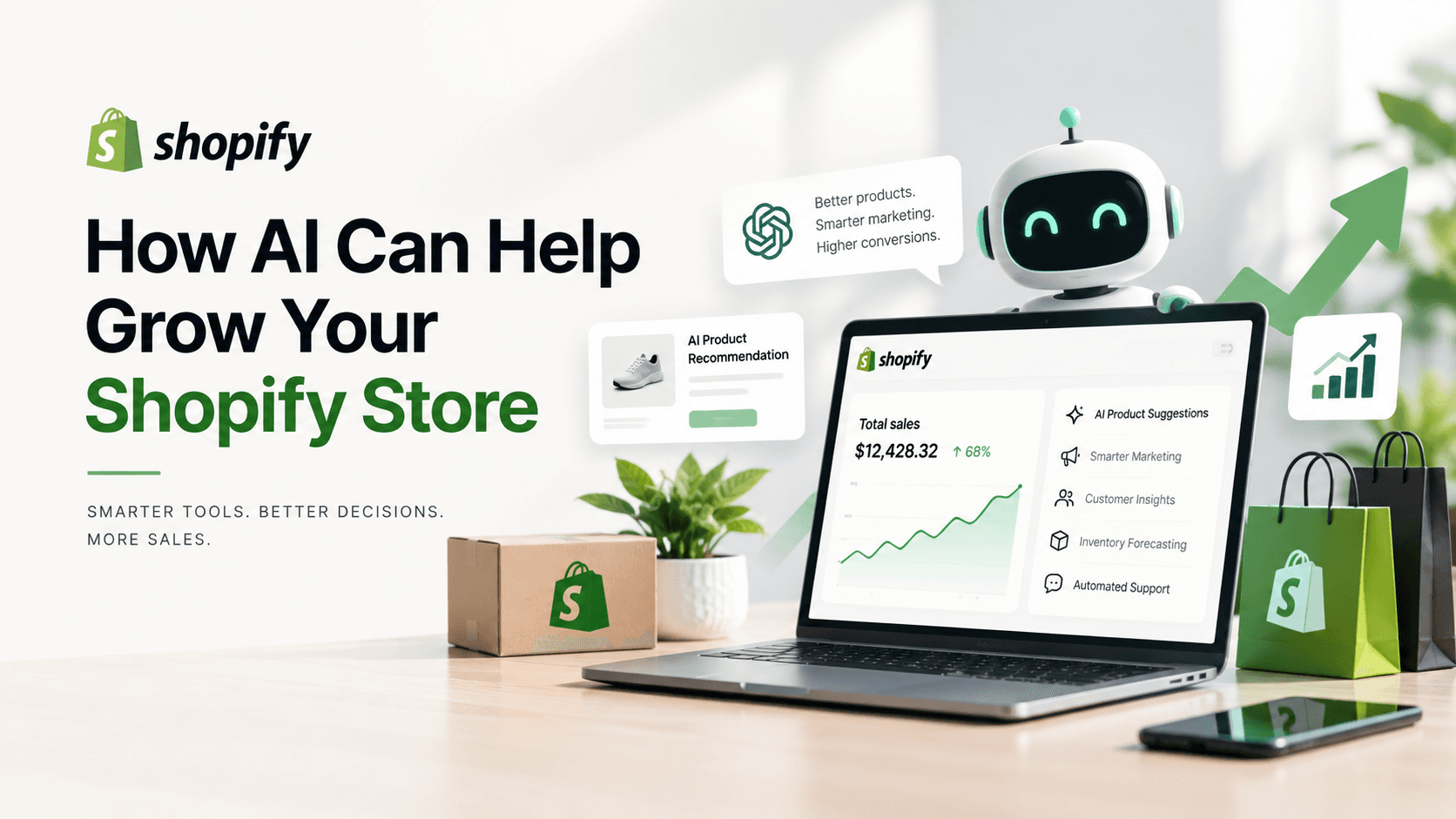
If you are trying to grow your shopify store, you have probably been bombarded with generic advice about installing ten different AI apps to automate your entire business. Most of it is noise. Just last week, a founder came to me with a Shopify store loading in seven seconds because they had installed four different AI chat and recommendation tools.
AI cannot run your business for you. However, if you use it to solve specific, narrow problems, it becomes a highly effective tool. Here is how you can actually use machine learning and language models to grow your shopify store without breaking your theme or annoying your shoppers.
1. Upgrade to Semantic Search
Most standard e-commerce search bars are basic. If a customer types "warm winter top" and your product is named "Thermal Fleece Sweater," a basic search engine might show zero results. This kills conversions.
AI-powered search uses semantic understanding. It figures out the intent behind a customer's query rather than just matching exact keywords. By implementing tools like Shopify's Semantic Search or third-party apps like Searchspring, you make it incredibly easy for people to find what they want. When people find what they want faster, your conversion rate goes up.
2. Deploy First-Line Support Bots (With an Escape Hatch)
Customer support is a massive bottleneck when you try to grow your shopify store. You cannot answer emails at 3 AM, but customers expect instant replies.
Instead of hiring a massive team immediately, you can use AI support agents powered by your own store data. Tools like Gorgias or custom integrations with OpenAI can handle repetitive questions instantly:
- "Where is my order?"
- "What is your return policy?"
- "Do you ship to Canada?"
The key here is the escape hatch. If the AI cannot resolve the issue in two prompts, it must hand the conversation over to a human. Never trap your customers in an infinite loop of robotic apologies.
3. Generate Product Descriptions That Do Not Sound Like Robots
Writing fifty unique product descriptions for a new collection is tedious. Many founders turn to ChatGPT, copy the first output, and paste it directly onto their site. The result? A store that sounds like every other dropshipping site on the internet, filled with words like "testament" and "revolutionize."
Instead, use AI as a first draft tool. Give the model a strict system prompt:
- Define your brand voice (e.g., casual, technical, minimalist).
- Provide a list of banned words.
- Input the raw specs (material, size, weight).
Let the AI generate the layout and the core benefits, then spend five minutes editing it to add your human touch. It saves you hours while keeping your brand authentic.
4. Smart Inventory Management
Stockouts kill momentum. If you run a successful ad campaign but run out of stock in three days, you waste your ad spend and anger your buyers.
Predictive AI tools analyze your historical sales data, seasonal trends, and current traffic to forecast when you will run out of specific SKUs. Apps like Inventory Planner use these algorithms to tell you exactly when to reorder from your suppliers. This keeps your cash flow optimized and ensures you do not overbuy inventory that will just sit in a warehouse.
5. Dynamic Product Recommendations
Standard "You May Also Like" grids often just show your newest products or random items from the same collection. AI recommendation engines are much smarter.
They track user behavior in real-time. If a visitor is looking at a leather wallet, the AI analyzes what previous buyers of that specific wallet ended up purchasing next—perhaps a matching key ring or a leather conditioner. Showing highly relevant upsells at checkout is one of the fastest ways to increase your Average Order Value (AOV) and grow your shopify store sustainably.
6. Clean Up Product Photos Instantly
Product photography is expensive and time-consuming. AI image tools have made it incredibly easy to clean up product photos without hiring a professional editor.
Shopify now has built-in AI image editor tools in the admin dashboard. You can instantly remove messy backgrounds, replace them with clean studio backdrops, or adjust the lighting. This ensures your product catalog looks consistent and professional, which builds trust with first-time visitors.
Keep It Light
Every script and app you add to your store adds weight. If you install five different AI tools that all inject heavy JavaScript into your storefront, your page load speed will plummet. A slow store will lose you more customers than any AI tool can win back.
Pick one bottleneck in your business right now—whether it is customer support, product copy, or search—and solve it with a single, clean integration. Once that is working smoothly, move to the next.